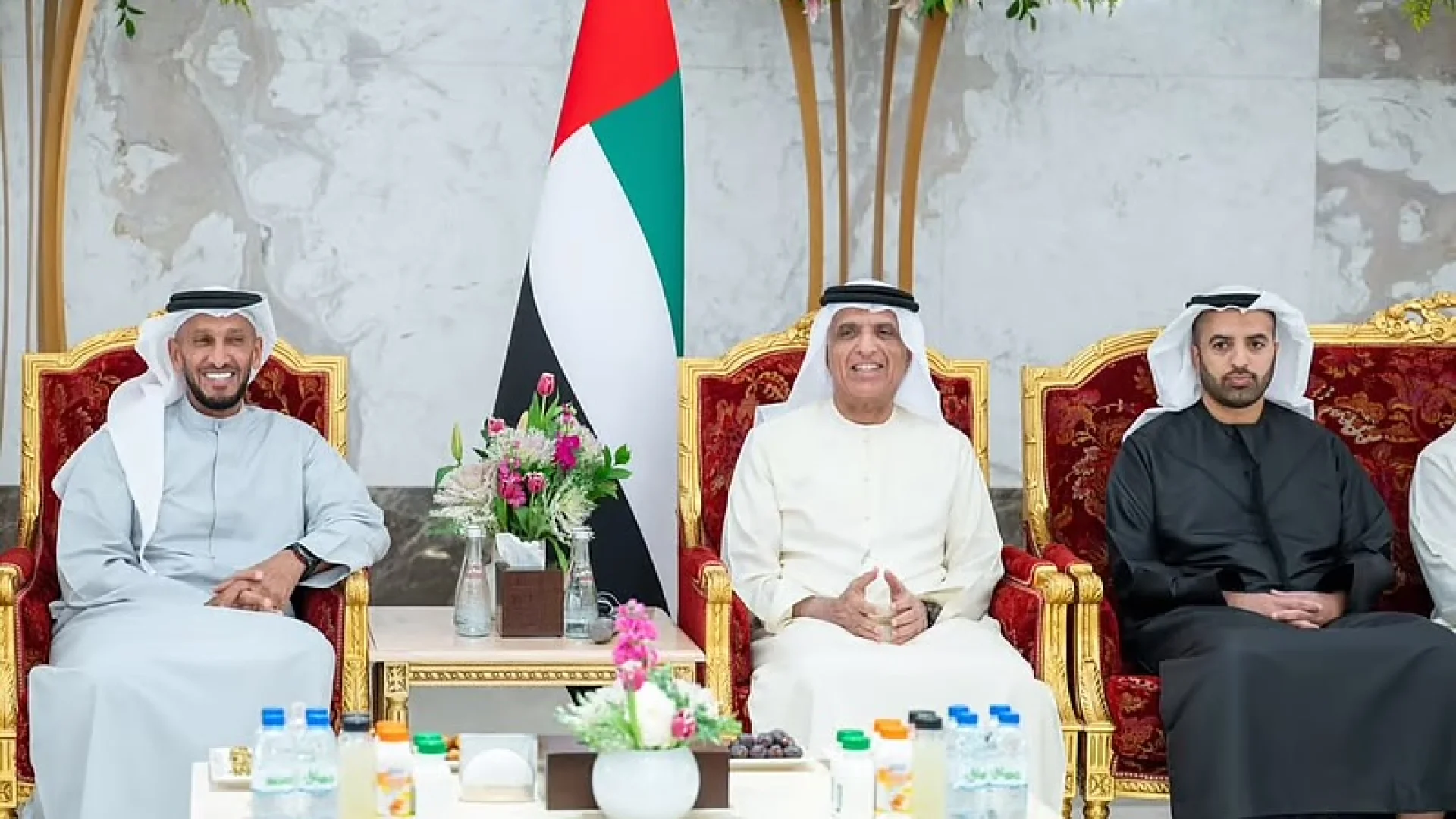
In Ras Al Khaimah, a message of support landed with the weight of statecraft: Ruler Sheikh Saud bin Saqr Al Qasimi praised President Sheikh Mohamed bin Zayed Al Nahyan’s leadership, framing it as a source of confidence and direction for the nation. The statement reads as more than ceremony—an affirmation of federal cohesion and continuity at the top. At a time when markets and communities prize predictability, the signal is clear: the UAE’s steering wheel remains steady, and the development agenda stays on course.
The mountains of Ras Al Khaimah hold the morning like a secret.
Light spills over the ridgelines, the air still cool enough to make you linger outside a few seconds longer. A car door clicks shut. Somewhere, a greeting is exchanged—brief, warm, practiced. And then, in the middle of an otherwise ordinary day, a sentence arrives that carries the unmistakable tone of intent.
Ras Al Khaimah’s ruler, His Highness Sheikh Saud bin Saqr Al Qasimi—member of the UAE Supreme Council—has publicly praised the leadership of President His Highness Sheikh Mohamed bin Zayed Al Nahyan. In the Emirates, words like these are rarely thrown into the wind. They are placed carefully, like a flag on a map: here is where we stand; here is the direction we trust.
On paper, it’s a commendation. In practice, it’s a signal.
When a ruler of one emirate speaks openly in support of the President, the audience is never just the room. It’s the federation itself—seven emirates tied by shared ambition—and everyone watching from outside: investors scanning for certainty, partners assessing alignment, residents gauging the mood of the nation.
Sheikh Saud’s praise underscores confidence in Sheikh Mohamed bin Zayed’s leadership and the broader national course. It points to unity at the top, continuity in governance, and a steady commitment to the country’s priorities—stability, progress, and an enduring focus on building institutions and opportunity.
Listen closely to conversations in the UAE—at a bank counter, in a government service hall, over coffee in a lobby where suitcases roll past like punctuation—and you’ll hear the same themes repeated, not as slogans but as lived experience: things work; plans move; decisions stick.
In many parts of the world, politics is loud. In the UAE, it is often quiet by design. That’s why a clear public commendation resonates. It doesn’t need theatrics. Its power is in the calm.
Sheikh Mohamed bin Zayed’s presidency has been widely associated with pragmatic statecraft and strategic continuity—strengthening the UAE’s position globally while keeping domestic development on a predictable track. Sheikh Saud’s statement reinforces that perception: that the leadership is aligned, the federation cohesive, and the national agenda protected from sudden swerves.
For residents, that alignment translates into an everyday sense of reassurance—schools expanding, infrastructure maintained, services digitising, public spaces evolving. For business, it translates into something even more measurable: risk.
Ras Al Khaimah doesn’t compete with Dubai’s neon tempo, and it doesn’t try to. It leans into its own strengths: dramatic nature, industrial capability, and a pace that feels human. Yet beneath that calm, the emirate has been steadily sharpening its economic profile—building tourism appeal, strengthening logistics, supporting manufacturing, and drawing new residents who want proximity without congestion.
So when the ruler of RAK praises the President, it’s also a form of positioning. It says: we are part of the shared course, and we are invested in its success. RAK’s development story is not separate from the federation’s—it is one of its chapters.
Public affirmations between leaders in the UAE often serve multiple functions at once. They reassure and they coordinate. They communicate stability in a way that markets understand. They remind the federation—quietly, effectively—that cohesion is an asset to be protected.
In a region where headlines can swing fast, the UAE’s brand has long been built on steadiness. Sheikh Saud’s praise strengthens that brand—subtly, but unmistakably.
Leadership in the UAE is commonly discussed not as ideology, but as delivery. Does the system keep moving? Are opportunities expanding? Do institutions feel strong enough to carry tomorrow’s pressures?
The commendation from Ras Al Khaimah frames Sheikh Mohamed bin Zayed’s leadership as a driver of those outcomes—guiding the nation’s direction and reinforcing the foundations that make long-term development possible.
Outside, the day brightens. The mountains fade slightly into the haze, as if making room for the city’s details—the roadworks, the cranes, the small signs of a place still building itself. And in that landscape of steady change, the message lands: the hands on the wheel are trusted.
For real estate investors, leadership unity in the UAE is not simply political theatre—it’s a meaningful proxy for policy continuity and execution capacity. Public praise from a member of the Supreme Council for the President reinforces a key investment premise: the federation remains aligned on long-term development, economic diversification, and institutional stability. In practical terms, that can influence everything from sentiment and capital flows to developers’ confidence in launching projects and lenders’ appetite for extending credit on predictable terms.
Ras Al Khaimah is particularly relevant in this context. As the emirate continues to expand its tourism and lifestyle proposition while maintaining an industrial base, it increasingly attracts investors looking for an alternative exposure within the UAE—often at different entry prices and yield profiles than Dubai or Abu Dhabi. Signals of federal cohesion help reduce perceived fragmentation risk and support the view that emerging emirates can ride the same macro tailwinds: infrastructure investment, regulatory modernisation, and sustained international interest.
While a leadership commendation does not change regulations overnight, it strengthens the narrative that often matters most in property markets: confidence in the runway. In places where long-duration projects—waterfront districts, hospitality corridors, industrial zones—depend on consistent policy and coordinated infrastructure, these signals become part of the investment mosaic. For investors, the takeaway is clear: cohesion at the top supports continuity on the ground, and continuity is the quiet engine behind real estate performance.