
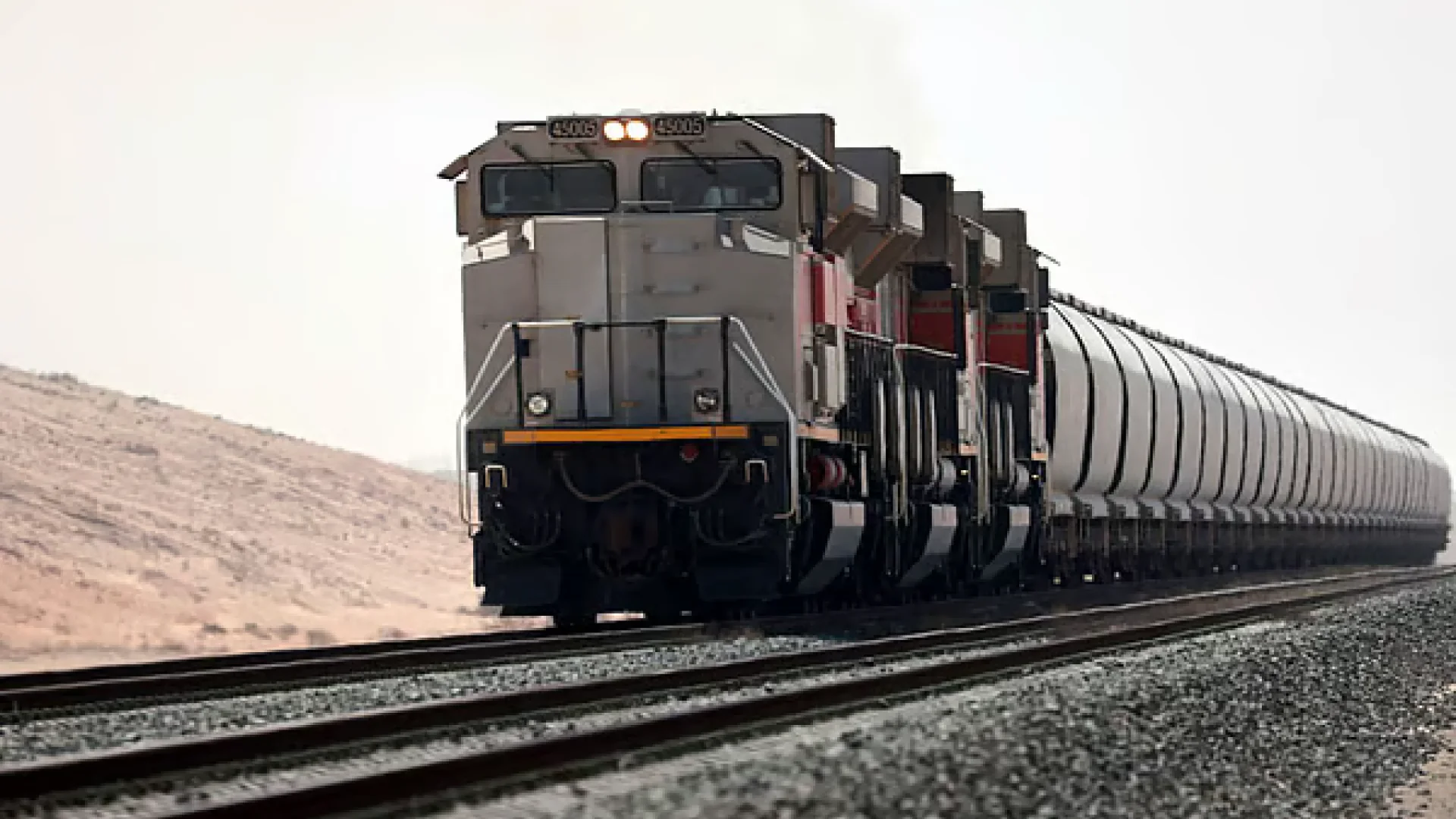

At dawn, a freight train slips through the heat haze like a metronome for the national economy—steady, timed, stubbornly dependable. As regional disruptions complicate sea lanes and stretch delivery windows, Etihad Rail has emerged as a practical backbone for moving goods inside the UAE, linking industrial zones, logistics hubs and ports through scheduled, high-capacity rail freight. The impact is felt in quieter highways, smoother inventory planning and a stronger sense of supply security for businesses that can’t afford surprises. In a moment when global trade feels jumpy, the UAE’s rail network is proving that resilience can be built—one departure slot at a time.
The day starts with metal sounds.
A container corner catches the light. A crane sighs as it swings. Boots scrape on gravel. And then the deeper note—low, steady, almost calm—when the locomotive takes the weight and the wagons answer with a short, tight clatter. Out beyond the terminal fence, the desert is already warming. The horizon blurs, as if the world is trying to erase its own edges. But here, on the track, everything is crisp. Measured. On schedule.
“If it leaves on time, my phone stays quiet,” a logistics supervisor jokes, half-smiling, eyes on the coupling. It’s the kind of line you only hear from someone who has lived through late-night reroutes and last-minute panic calls. Around him, the choreography continues—scanners beep, paperwork is checked, a hand signals, another nods back. And in that small exchange is the whole story: in an era of regional disruptions, predictability has become a competitive advantage.
Trade routes are supposed to be boring. That’s their superpower. When they’re working, nobody notices them. When they’re not, everybody does—retailers, manufacturers, contractors, families waiting for that one part that keeps a machine alive.
In recent months, the region’s logistics landscape has been under pressure. Disruptions have forced detours, stretched transit times, and injected uncertainty into shipping schedules. Costs don’t just rise in obvious ways like freight rates; they creep in through insurance, buffering stock, overtime, missed sales windows, and the simple mental load of running a supply chain that can’t trust its own calendar.
Inside the UAE, Etihad Rail has been playing a different tune: keep the domestic flow steady. Keep the shelves supplied, the projects fed, the factories running. Not by replacing sea freight—nothing does that at scale—but by offering a reliable inland corridor for the kind of cargo that rewards structure: bulk materials, containers on regular lanes, industrial inputs that can’t afford to arrive “sometime next week.”
Stand close enough to a freight operation and you’ll notice something that rarely makes it into presentations: rail is a mood. It’s less improvisation, more routine. The work is repetitive by design, because repetition is what produces consistency.
On highways, everything is a variable—traffic surges, roadworks, driver availability, weather, bottlenecks at gates. On rail, the variables shrink. There’s still complexity, of course—terminal slots, loading windows, compliance checks, last-mile handovers—but the backbone is a timetable. A promise written in minutes.
Etihad Rail’s freight services connect key industrial and logistics areas across the UAE and tie into the country’s ports and distribution ecosystem. For businesses, that means another lever to pull when the region’s broader transport picture gets noisy. It’s not always about being faster; often, it’s about being steadier. And steadier is what lets planners sleep.
Near the loading area, you see the UAE in objects: bagged raw materials stacked like brickwork, coils of metal that look like giant springs, container walls scuffed with the history of other ports. This is the freight that makes cranes move in cities and lights stay on in factories.
For the construction ecosystem alone, reliable movement of materials matters. When deliveries slip, schedules cascade. A delayed batch of aggregate becomes a delayed pour; a delayed pour becomes a delayed handover; a delayed handover becomes a delayed payment. Multiply that across dozens of sites and you get the kind of economic drag that doesn’t show up in headlines—but shows up in margins.
By shifting appropriate volumes to rail, companies can reduce exposure to road congestion and improve planning for high-throughput lanes. In practical terms, it can mean fewer trucks doing long-haul runs, with road transport focusing on what it does best: flexible, short-distance distribution.
There’s a moment that repeats itself in every logistics hub: a quick check, a short question, a two-word answer.
“Seal number?”
“Matched.”
It sounds trivial until you realize how much modern trade depends on these micro-certainties. One mismatch can stop a shipment. One delay can unravel a day’s plan. Etihad Rail’s value, in this tense regional context, is that it multiplies these small certainties into a larger one: the UAE’s internal supply lines keep moving.
And there’s a second-order effect, too. When businesses trust their domestic transport, they can take smarter risks elsewhere—optimize stock, renegotiate lead times, commit to customers with more confidence. Resilience isn’t just about surviving disruption; it’s about continuing to operate like you expect tomorrow to arrive.
The UAE has spent years positioning itself as a global hub—ports, airports, free zones, industrial corridors. But hubs need redundancy. When one artery tightens, another must carry the load. Rail freight adds a robust inland option that complements maritime and road networks.
That matters especially when uncertainty rises. Companies don’t stop needing food, building materials, spare parts, packaging, consumer goods. The question becomes: can you keep your promises when your suppliers’ promises wobble?
At the terminal, the sun is now bright enough to bleach shadows. The train begins to roll. A worker raises a hand—half wave, half signal. “Safe run,” he says, more to the machine than to anyone else. The wagons follow the locomotive into the shimmering distance, and for a moment the idea of stability looks surprisingly physical: steel wheels on steel rails, carrying the everyday life of a country.
For real estate investors, Etihad Rail’s growing role in domestic supply resilience is not just a transport story—it’s a location story. In maturing markets, logistics connectivity becomes a pricing factor, shaping where tenants expand, where developers build, and how assets are underwritten.
1) Industrial & logistics demand clusters around certainty. Warehouses, light manufacturing, cold storage and fulfillment operators prioritize predictable inbound/outbound flows. As rail freight absorbs suitable long-haul volumes, assets near logistics nodes and intermodal handover points typically gain an edge: stronger tenant demand, longer leases, and better retention—especially for high-spec stock that supports automation and time-sensitive inventory cycles.
2) Land values: the “near the corridor” premium is real—but only with last-mile. Investors should differentiate between proximity to a rail line and proximity to a functional node. The real uplift usually concentrates where zoning, truck access, utilities, and permitting allow immediate development. Look for sites that can serve as staging, cross-dock, or value-add logistics locations rather than betting purely on map distance.
3) Resilience is underwriting. Recent regional disruptions have effectively put a price on reliability. Tenants with critical supply chains will pay for locations that reduce variability—through multi-modal options, easier inventory planning, and lower disruption risk. This can support more defensive cashflows in periods of volatility, improving the risk profile of well-located industrial assets.
4) Spillover into residential. Expanding logistics and industrial activity drives job creation across skill bands. That can translate into steady demand for workforce housing and mid-market rental stock in commutable areas, particularly near established employment clusters and transport corridors.
5) Investment strategy signals. Expect continued interest in (a) core logistics with strong covenants, (b) value-add industrial refurbishments focused on energy performance and yard efficiency, and (c) development partnerships in logistics zones where absorption is supported by national infrastructure priorities. In short: Etihad Rail strengthens the UAE’s investment narrative as a resilient trade-and-production platform—and resilient platforms tend to attract long-duration capital.