
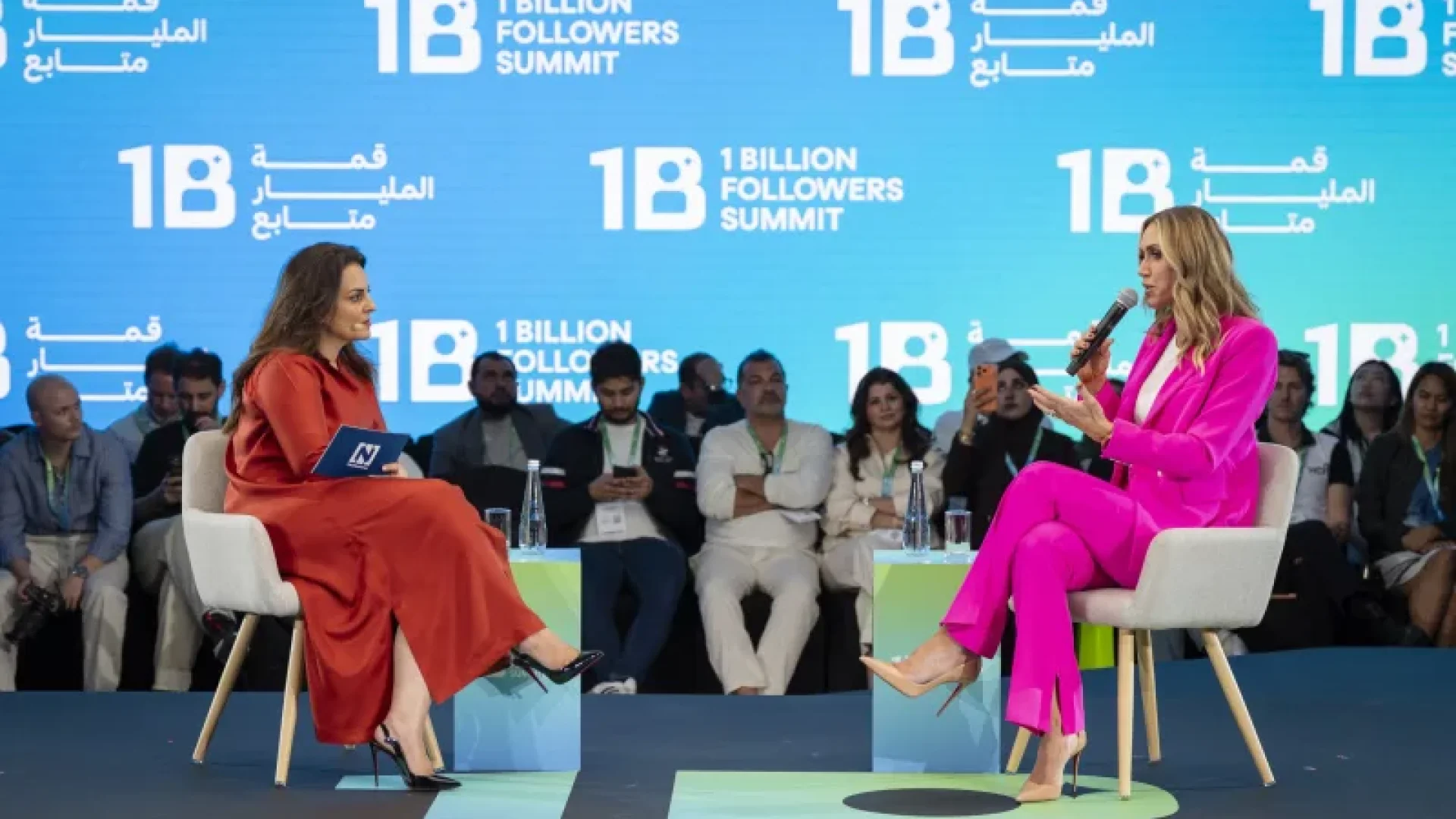

In a recent interview, Lara Trump argued that Dubai has fundamentally changed how Americans and other Westerners experience the Middle East—less anxiety, more ease, more belonging. She points to a city that feels safe, highly international, and designed for frictionless living, where visitors quickly become repeat guests and sometimes residents. The message lands beyond tourism: Dubai’s brand of openness has become an engine for talent, capital and long-stay migration. And where people settle, real estate demand follows.
The airport doors slide apart and the air changes instantly—cool, clean, expensive. A family wrestles carry-ons. A consultant in a crisp shirt taps out a voice note. Somewhere behind you, luggage wheels chatter like impatient insects. In front of you, Dubai glows—less like a city and more like a promise that learned how to build itself.
“Welcome.” The word lands casually from a staff member who looks like he’s said it a thousand times today and still means it. A small moment, almost nothing. But it’s the kind of “almost nothing” that forms a whole impression—and it’s exactly the impression Lara Trump has put into a single sentence: Dubai has made Americans and Westerners feel much more welcome in the Middle East.
Outside, the night is bright. Motorways thread through towers. Headlights glitter off glass. The city doesn’t whisper; it hums. Yet what stands out isn’t the scale—it’s the ease. You don’t feel like you’re stepping into someone else’s complicated story. You feel like you’ve arrived somewhere that has rehearsed your arrival.
Lara Trump’s remark—quoted widely—reads like a compliment, but it functions like a signal. “Welcome” is not just hospitality. In global cities, it’s an economic tool. It influences where people travel, where they accept jobs, where they open companies, where they place money. Her framing suggests Dubai has become a place where Western visitors can move through daily life with fewer cultural frictions and fewer security worries, and with a clear sense that the city expects them—not as outsiders, but as participants.
Dubai’s internationalism is not subtle. You hear it in the elevator, in the café line, in the hotel lobby where accents bounce off marble. English works as a default bridge. Services are streamlined. The city feels engineered for newcomers—especially those who are used to high-speed convenience.
Every city sells something. Dubai sells certainty. Not the loud kind—no dramatic warnings, no visible panic. The certainty is in the way late-night streets still feel usable, in the way taxis arrive without drama, in the way rules appear to hold. Lara Trump’s comments lean into that sensation: that Dubai feels secure, orderly, and predictable in the best way.
A driver says it in the simplest language possible, glancing at the skyline as if it were the answer to a math problem: “People come because it’s easy.” He pauses, then adds, “Life is easy.” In other places, that might sound like an advertisement. Here, it feels like an observation.
For many Western audiences, the Middle East is still too often narrated through conflict, geopolitics, and old assumptions. Dubai has spent years rewriting that script—through tourism, business travel, headline-grabbing architecture, major events, and a lifestyle that looks unmistakably global.
The thing about perception is that it can change faster than policy. One good trip rewires a thousand vague fears. A smooth week of meetings, dinners, and beach mornings can do more than a stack of brochures. Lara Trump’s line taps into that dynamic: Dubai doesn’t just invite; it disarms doubts.
In Downtown, fountains rehearse their choreography. At the Marina, runners trace the waterline as supercars idle at valet stands. In co-working lounges, founders pitch ideas over flat whites that taste like they’ve been calibrated. Dubai is spectacle, yes—but it’s also routine. And routine is what turns a destination into a base.
Listen closely and you’ll hear the micro-dialogues that build the bigger mood:
“First time?” a barista asks, sliding over a cardamom latte.
“Yes.”
“You’ll be back,” she says, not as a sales line, but as if she’s seen the pattern repeat all year.
This is how “welcome” becomes real: not as a slogan, but as a series of small interactions that reduce the feeling of foreignness. The city doesn’t demand you decode it. It meets you halfway.
When a high-profile American voice says Dubai feels more welcoming, it travels. It influences dinner-table conversations, corporate relocation discussions, and the mental maps people carry of what is “safe,” “modern,” and “possible.” In a world where remote work and flexible lifestyles are reshaping migration, these perceptions can move talent and money with surprising speed.
Dubai’s model is straightforward: attract people, make their lives workable, encourage them to stay. Talent brings companies. Companies bring investment. Investment funds new districts, new infrastructure, new ambitions. The cycle feeds itself—and the city’s polished “welcome” is one of the gears that keeps it turning.
Her framing puts emphasis on three pillars that repeatedly show up in Dubai’s global narrative:
In combination, these pillars create something powerful: confidence. And confidence is what turns “Maybe I’ll visit” into “Maybe I’ll move.”
For real estate investors, “feeling welcome” is not fluff—it’s a demand catalyst. Cities that successfully reduce psychological barriers for international residents tend to see deeper, more diversified housing demand: tourists become repeat visitors, repeat visitors become long-stay renters, and renters become buyers. Lara Trump’s statement, by reinforcing Dubai’s accessibility and safety in Western discourse, supports the narrative that underpins cross-border capital flows.
1) Demand transition: short-stay to long-stay. A welcoming, low-friction city often sees strong performance first in hospitality and serviced apartments, then in conventional rentals. As more professionals test Dubai through business trips or seasonal stays, the market for well-located, well-managed apartments strengthens—especially in areas with transit links and job proximity (Downtown, Business Bay, Marina/JLT corridors, and established community hubs).
2) “Safety premium” and pricing power. Perceived safety and reliable governance can translate into pricing resilience. Tenants pay for peace of mind; buyers pay for stability. Buildings with reputable developers, strong facilities management, and consistent community standards can command a premium, particularly among international renters who prioritize convenience and predictability.
3) Broader buyer pool, lower narrative risk. When Western media narratives shift from suspicion to familiarity, the “headline risk” discount can shrink. That matters for liquidity: more end-users and international investors are willing to transact, which can support resale depth in prime micro-markets.
4) Segment-specific opportunities and watchpoints.
5) What to track now. Investors should monitor rental growth by district, supply pipelines and handover schedules, changes to short-stay rules, and the real depth of secondary-market transactions (not just headline price points). Dubai is not a single market; it’s a mosaic of micro-markets—and “welcome” translates into value differently in each one.
Ultimately, Dubai’s advantage is that it treats openness like infrastructure. And when openness becomes infrastructure, it tends to show up—quietly but persistently—in occupancy, rents, and long-term demand.